
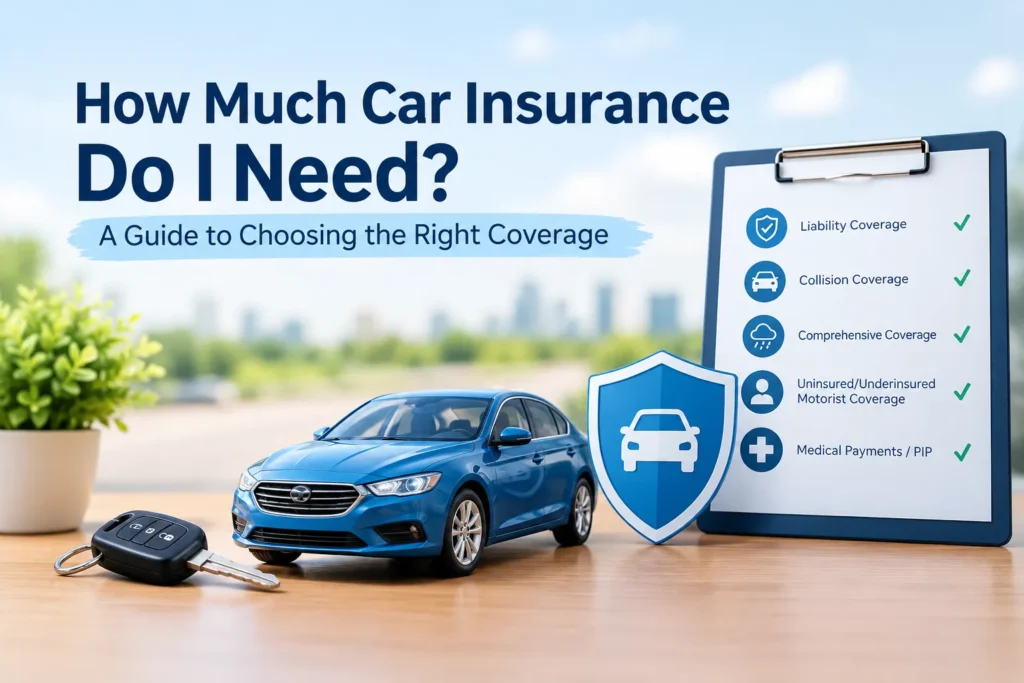
How much car insurance do I need to protect myself without overpaying every month? Choosing the right coverage means balancing your state’s requirements with your financial situation, vehicle value, driving habits, and the level of risk you are comfortable carrying yourself.
When your state has minimum coverage requirements, it can be confusing to select. Costs for repairs, medical expenses, property damage, and other expenses can easily become a concern with low limits in the event of a serious car accident.
How Much Car Insurance Do I Need?
There is no single amount of car insurance that is right for every driver. Your coverage needs depend on your state’s requirements, financial situation, vehicle, driving habits, and the amount of financial risk you could face after an accident.
To determine the amount of car insurance you need, take into account your financial exposure, savings, property, and income. If the driver has more assets, he or she may want to look into higher liability levels.
Check Your State’s Minimum Requirements
All states have their own laws governing auto insurance. Research the local legal limits to find out what the legal minimum is.
But it shouldn’t be based solely on minimums when determining how much car insurance I need. The issue of legal compliance and financial protection are two separate questions.
How Much Bodily Injury Coverage Should I Have?
Bodily injury liability normally pays for some of the expenses if you are at fault for an accident that results in someone getting hurt. Medical treatment, lost income, legal expenses may be a part of claims.
If you’re wondering, “How much bodily injury coverage should I have?” take into account what you might be liable for financially.
How Much Property Damage Car Insurance Do I Need?
Property damage liability usually covers damage you cause to another person’s property, such as their car. Determining how much property damage car insurance you need is required by law in your state and depends on what level of coverage you want to purchase with car insurance. If you are wondering what car insurance limits you should have, you should compare your coverage with the amount you can expect a big accident to cost.
Compare Your Car Insurance Coverage Options
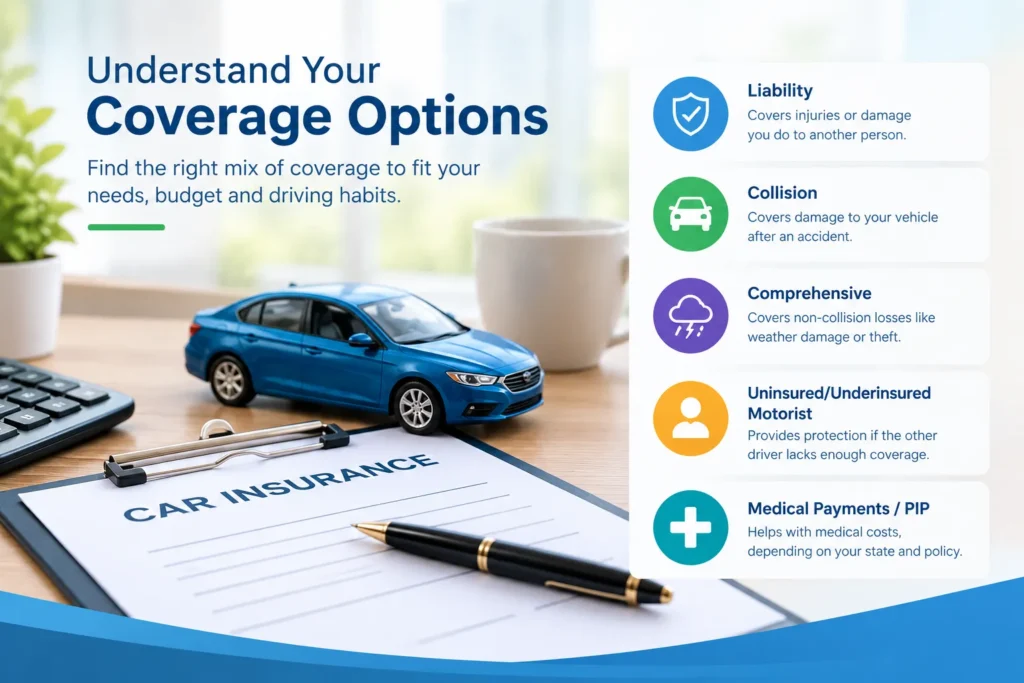
Common car insurance coverage options include:
- Liability: Covers injuries or damage you do to another person.
- Collision: Covers damage to the vehicle if it happens to collide with another vehicle (after paying your deductible).
- Comprehensive: Covers some losses other than collisions, like weather-related damage or theft.
- Uninsured/underinsured motorist: May cover some of the losses from an underinsured or uninsured motorist.
- Medical payments or PIP: Will help with some medical costs, depending on your state and policy.
Depending on the type of vehicle, value, financing, deductible, and driving requirements, options may seem reasonable.
How Your Assets and Income Affect Liability Coverage
Your financial situation can affect how much liability coverage you may want to carry. Consider your savings, property, income, investments, and other assets when reviewing your limits. Higher liability limits may provide more protection if a serious claim exceeds lower policy limits.
Your driving habits also matter. Someone who drives daily, has a long commute, or regularly drives in busy areas may have different coverage considerations from someone who drives only occasionally. Comparing the cost of different limits can help you understand how much additional protection would affect your premium.
When State Minimum Coverage May Not Be Enough
How much car insurance is enough depends on more than the premium. When considering auto insurance coverage, consider liability limits, deductibles, protection for the vehicle, and exclusions with them.
A proper amount of car insurance coverage should reflect the amount that is required by law and what you can afford in case of an accident. A licensed insurance professional can tell you about the limits available to you.
Conclusion
How much car insurance do I need depends on the state, your budget, the car, and the risks of your driving. First, determine the coverage requirements and then evaluate if the coverage limits are adequate in your situation. Don’t just focus on the price; think about liability limits, deductibles, and optional coverage. Update your policy after a change in car ownership, driver, or finances.
Frequently Asked Questions
Is state minimum car insurance enough?
Not always. It might meet legal requirements, but it might offer little financial security in the event of a serious accident.
Should I get comprehensive and collision coverage?
It will vary according to your vehicle and budget. If you are asking yourself, “How much car insurance do I need?” ask yourself whether or not it will be difficult to replace the car yourself.
How often should I review my policy?
Check it whenever you have large changes in your household, such as a house move, new car, or new driver. These changes may impact your coverage needs.
Does financing affect my coverage?
Yes. Physical damage coverage may be required by a lender or leasing company while financing or leasing a vehicle.
Why do insurance limits matter?
The extent to which your policy will cover a particular loss under coverage is based on limits. The higher the limits, the more protection against large claims.
How do deductibles affect insurance?
A deductible is usually the amount that you must pay for a covered claim before your insurer pays the rest of the covered amount. Your deductible may influence your premium costs.
Do I need uninsured motorist coverage?
Uninsured/underinsured motorist coverage may provide protection for certain losses caused by a driver who has no insurance or insufficient insurance. Requirements and availability vary by state and policy.
Can I change my insurance limits?
Typically, it is possible to request policy changes. Before changing your limits, ask how they will impact your premium and protection.
How do I know if my coverage is enough?
The amount of car insurance that you need is dependent on your state, finances, vehicle, and risk. Before renewal, check your limits against these factors.