
If a member of the insured driver’s policy is at fault in an accident that causes injuries and property damage to someone else, then the liability car insurance coverage applies. It generally does not cover repairs to the insured driver’s own vehicle or their own medical bills.
Knowing what is included in this coverage, its coverage limits and when extra coverage is required can assist drivers in picking an appropriate policy.
What Does Car Liability Insurance Cover?
Liability car insurance coverage includes two main types of protection.
1. Bodily Injury Liability
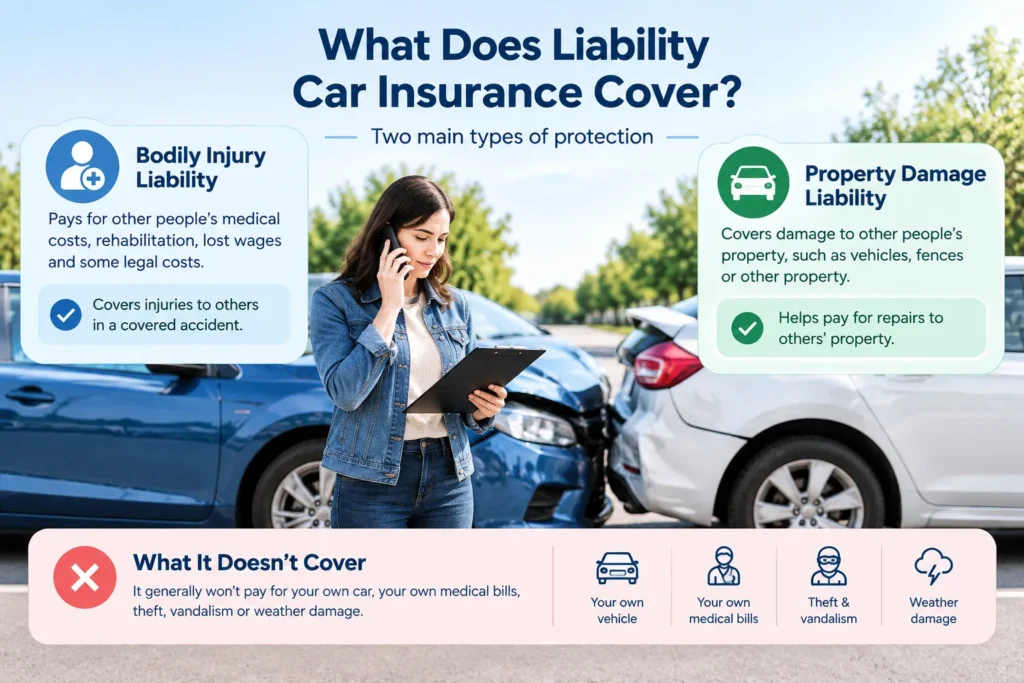
The bodily injury liability coverage pays for other people’s medical costs, rehabilitation costs, lost wages and some legal costs in the event of an accident that was caused by the insured driver.
An example of this is if a driver runs a red light and causes harm to another motorist, this coverage may be used to cover eligible expenses, up to the policy limits.
2. Property Damage Liability
Property damage liability covers damage to other people’s property as a result of a covered accident. The damage could be to a vehicle, damaged fences or any property.
For instance, if someone collides with the other car while it’s in a parking area, the coverage will help cover those repairs.
What Does Liability Car Insurance Not Cover?
Although car liability coverage will keep you safe from claims by others, it won’t pay for every expense involved in an accident.
Common exclusions include:
- Repairs to the insured driver’s own car.
- Medical bills for the insured driver.
- Theft, vandalism, and weather damage to the insured vehicle.
- Damages exceeding the policy limits.
Damage to the covered vehicle resulting from a covered collision may be covered under collision coverage. Full coverage can also cover theft, hail, fire and vandalism, depending on policy coverage.
How Does Liability Car Insurance Coverage Work?
In liability car insurance coverage, the driver who is insured is liable for injuries or property damage covered by the policy.
If an accident is caused by a driver and costs of medical treatment and vehicle repairs are $18,000 and $7,000, respectively, what is the total cost of the accident? While these claims may be covered by the policy and if the policy has adequate limits, the insurer may pay the eligible expenses.
If the cumulative claims are greater than the limits, the driver who caused the accidents may be liable for the rest.
What Are Liability Insurance Coverage Limits?
Liability insurance coverage limits determine the maximum amount an insurer will pay for covered claims. Policies often display these limits as three numbers, such as 25/50/20.
| Limit | Meaning |
| $25,000 per person | Maximum for one injured person |
| $50,000 per accident | Maximum for all bodily injuries in one accident |
| $20,000 per accident | Maximum for covered property damage |
These figures are examples, not a statement of current legal requirements.
Higher limits generally provide more financial protection, although premiums may increase. Drivers with valuable assets may want to consider limits above the legal minimum.
What Is the Minimum Liability Car Insurance Requirement in Illinois?
Illinois generally requires drivers to carry minimum liability insurance of:
- $25,000 for bodily injury or death per person.
- $50,000 for bodily injury or death per accident.
- $20,000 for property damage per accident.
Typical limits are: 25/50/20. Illinois also has state rules that mandate that uninsured motorist bodily injury coverage be provided.
The basic legal requirement for insurance is to have the minimum amount, which may not be sufficient following a serious accident. Drivers are advised to check with the Illinois Secretary of State or Illinois Department of Insurance to find out what is required.
Liability vs. Full Coverage Car Insurance: What Is the Difference?
Liability vs. full coverage car insurance comes down to the type of protection provided.
| Feature | Liability Only | Full Coverage |
| Injuries to others | Yes | Yes |
| Damage to another person’s vehicle | Yes | Yes |
| Damage to your own car after a collision | Usually no | Usually covered |
| Theft and weather damage | Usually no | Usually covered |
| Premium | Generally lower | Generally higher |
Full coverage is not a legal term, but typically refers to coverage for liability, collision and comprehensive coverage. Actual coverage is dependent on the policy.
If a driver can afford to repair or replace his or her own vehicle, then a liability-only insurance policy might be appropriate. For newer or more valuable vehicles, it may be better to opt for the full coverage option, particularly if it is a lender requirement.
How Can Drivers Choose the Right Liability Insurance?
When comparing auto liability insurance, consider these factors:
- State requirements: Meet the applicable minimum limits.
- Financial protection: Consider whether the limits could cover a serious accident.
- Budget: Compare prices for different coverage limits.
- Driving habits: Consider how frequently and where the vehicle is used.
- Additional coverage: Check whether collision, comprehensive, or umbrella insurance may be appropriate.
Compare quotes using the same limits and review exclusions before purchasing. The cheapest policy may not provide enough protection after a major accident.
Conclusion:
Liability car insurance coverage helps protect drivers from the financial consequences of injuries and property damage they cause to others. Understanding policy limits, state requirements, and exclusions makes it easier to choose suitable protection.
Compare quotes and consider whether additional coverage is necessary before purchasing a policy.
Frequently Asked Questions
What does liability car insurance cover?
It generally pays for other people’s injuries and property damage when the insured driver causes a covered accident, subject to policy limits and exclusions.
Does liability insurance cover your own car?
No, liability insurance generally does not cover your own vehicle. Collision and comprehensive coverage may help pay for eligible repairs or other covered losses.
Is liability insurance legally required?
Most US states require liability insurance or another form of financial responsibility. Exact requirements vary by state.
What do liability insurance limits mean?
Limits show the maximum amount an insurer pays for covered claims. Higher limits can offer more protection against expensive accidents.
Is liability insurance cheaper than full coverage?
Yes, liability-only insurance generally costs less because it usually excludes damage to your own vehicle.
What happens when damages exceed policy limits?
The responsible driver may have to pay the remaining covered damages personally if claims exceed the available insurance limits.
Does liability insurance cover medical bills?
It may cover eligible medical expenses for other people injured in an accident caused by the insured driver, but generally not the driver’s own medical bills.
What is the minimum liability insurance in Illinois?
Illinois generally requires $25,000 per person, $50,000 per accident for bodily injury, and $20,000 for property damage.
Can drivers choose higher liability limits?
Yes, insurers commonly offer higher limits. These can provide additional financial protection but may increase premiums.
Should drivers choose liability-only or full coverage?
Liability-only may suit drivers who can afford their own vehicle repairs. Full coverage may be better for newer, valuable, or financed vehicles.