

Life insurance helps protect the people who depend on you financially. If you pass away while your policy is active, the insurance company pays a death benefit to your chosen beneficiaries. This money can help cover household expenses, outstanding debts, education costs, and other financial needs.
Understanding how does life insurance work can help you choose the right coverage, compare policy options, and decide whether life insurance fits your family’s needs.
What Is Life Insurance?
Life insurance is a contract between you and an insurance company. You pay regular premiums, and the insurer agrees to provide a financial payout to your beneficiaries after your death, subject to the policy terms.
This is the basic life insurance definition. The life insurance meaning is simple: it provides financial support to loved ones when they can no longer rely on your income.
How Does Life Insurance Work?
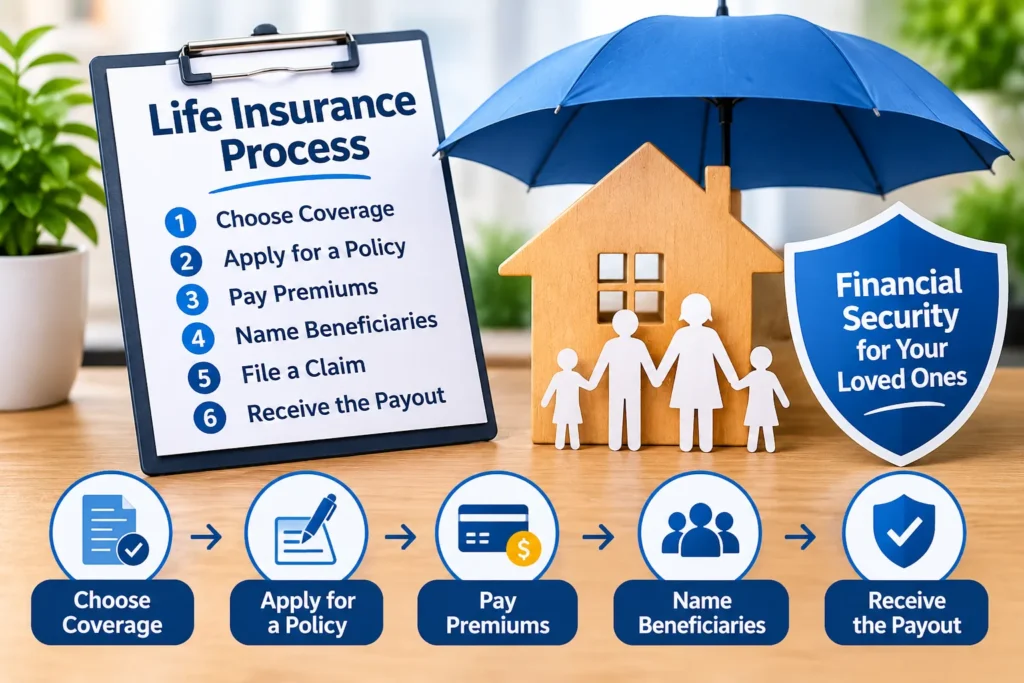
Understanding how life insurance works involves a few basic steps:
- Choose coverage: Select a policy type and death benefit based on your family’s financial needs.
- Apply for a policy: Provide details about your age, health, lifestyle, and medical history.
- Pay premiums: Make payments monthly, quarterly, or annually to keep coverage active.
- Name beneficiaries: Choose who will receive the death benefit.
- Submit a claim: After your death, beneficiaries contact the insurer and provide the required documents.
- Receive the payout: Once the claim is approved, the insurer pays the benefit according to the policy.
How Does a Life Insurance Policy Work After Death?
If the insured person dies while the policy is active, the beneficiary typically submits a claim form and a certified death certificate. The insurer reviews the documents and checks the policy terms before issuing payment.
The beneficiary can generally use the money for mortgage payments, daily expenses, education, debts, or other needs.
What Are the Main Types of Life Insurance?
The two main categories are term life insurance and permanent life insurance.
Term Life Insurance
Term life insurance provides coverage for a specific period, such as 10, 20, or 30 years. If the insured person dies during that period, beneficiaries may receive the death benefit.
- Usually more affordable than permanent coverage.
- Provides protection for a set number of years.
- Standard term policies do not build cash value.
It can be useful for families managing temporary financial responsibilities, such as a mortgage or children’s education.
Whole Life Insurance
Whole life insurance provides lifelong coverage as long as the policy remains active. It also builds cash value over time, according to the policy’s terms. Premiums are generally higher than those for term insurance.
Universal Life Insurance
Universal life insurance is another type of permanent coverage. It offers flexibility in premium payments and death benefit options, along with a cash value component. Policy costs and cash value performance can affect how long coverage lasts.
How Much Does Life Insurance Cost?
Life insurance premiums vary based on personal circumstances and policy details. Common pricing factors include:
- Age: Younger applicants generally receive lower rates.
- Health: Medical history and tobacco use can affect premiums.
- Coverage amount: Higher death benefits usually cost more.
- Policy type: Term coverage generally has lower initial premiums than permanent coverage.
- Policy length: Longer coverage periods may increase costs.
- Lifestyle: Certain occupations and activities may affect pricing.
Compare quotes from multiple insurers using similar coverage amounts and policy terms to understand your options.
What’s the Purpose of Life Insurance?
The primary purpose of life insurance is to provide financial protection for your loved ones. A death benefit can help your family manage expenses and maintain stability after losing your income.
Common uses include:
- Income replacement: Helping dependents cover everyday living expenses.
- Debt repayment: Providing money for mortgages, loans, and other outstanding balances.
- Education costs: Supporting children’s future schooling or college expenses.
- Final expenses: Helping pay funeral costs and related bills.
- Long-term support: Giving surviving family members financial resources during a difficult transition.
How Much Life Insurance Coverage Do You Need?
Your coverage should reflect your family’s financial responsibilities. Start by calculating:
- Annual household expenses and expected income needs.
- Mortgage balances and other debts.
- Future education and childcare costs.
- Final expenses.
- Existing savings and insurance coverage.
Subtract your available financial resources from your estimated needs. This provides a starting point for deciding how much coverage to consider.
Review your policy when major life changes occur, such as marriage, having children, buying a home, or approaching retirement.
Conclusion
Understanding how does life insurance work helps you make informed decisions about protecting your family’s financial future. Compare policy types, consider your dependents’ needs, and choose coverage that fits your budget. Reviewing the policy terms carefully can help ensure your beneficiaries receive the protection you intend.
Frequently Asked Questions
Is life insurance worth it?
It can be valuable if someone depends on your income or financial support. Your needs, savings, and family responsibilities will help determine whether coverage makes sense.
Do you get money back from life insurance?
Standard term policies generally do not return premiums when coverage ends. Some permanent policies build cash value that may be accessed under specific conditions.
Can I have multiple life insurance policies?
Yes. You can have more than one policy, subject to insurer requirements and underwriting approval.
Who receives the life insurance payout?
The named beneficiaries receive the death benefit after an approved claim. If no eligible beneficiary is available, the policy terms determine how the proceeds are handled.
Are life insurance payouts taxable?
In the United States, death benefits are generally not taxable income for beneficiaries. However, certain exceptions may apply, including interest paid on the benefit or estate-tax situations.
Can I change my beneficiary?
Most policies allow beneficiary updates by submitting a request to the insurer. Some designations may be irrevocable, so check your policy first.