
Choosing the right auto insurance can make a big difference when your vehicle is damaged or stolen. Two common options are collision and comprehensive coverage. Both help pay for damage to your own vehicle, but they protect against different situations.
Understanding collision vs comprehensive insurance can help you decide whether you need one type or both, based on your vehicle’s value, driving habits, and budget.
What is the Difference Between Collision and Comprehensive Insurance?
The main difference between collision and comprehensive insurance is the cause of the damage.
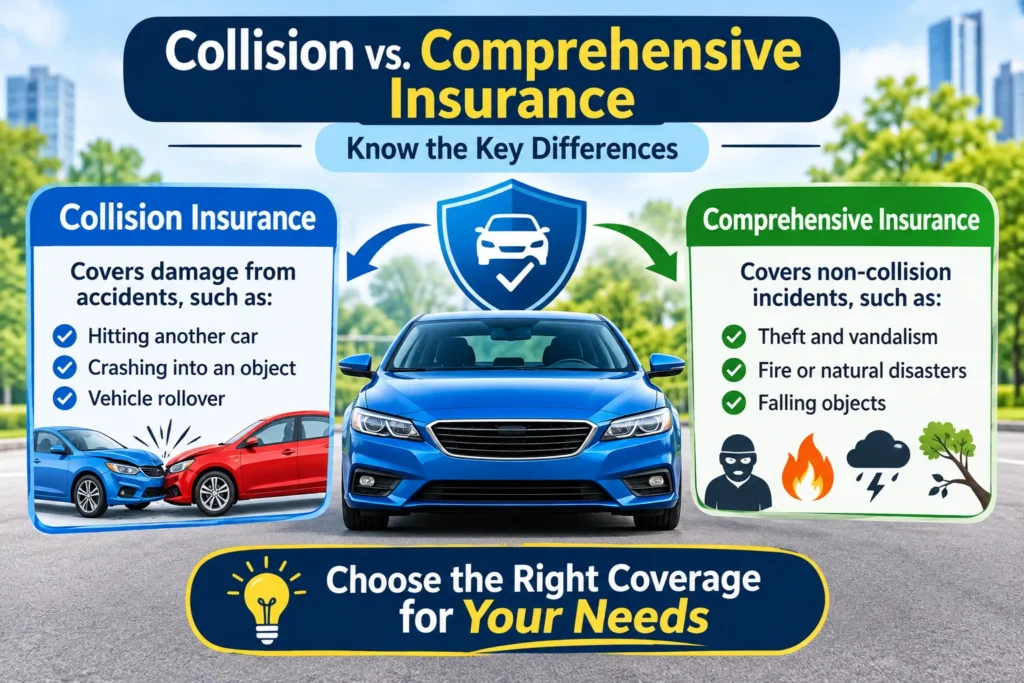
- Collision insurance covers damage when your vehicle hits another car, an object, or rolls over.
- Comprehensive insurance covers damage caused by events other than collisions, such as theft, fire, vandalism, and severe weather.
For example, hitting a fence would generally fall under collision coverage, while a tree branch falling on your parked car would typically fall under comprehensive coverage.
What Does Collision Insurance Cover?
If you’re wondering what does collision insurance cover, it typically pays to repair the vehicle following a covered accident, regardless of who was at fault.
Common examples include:
- Hitting another vehicle.
- Colliding into a wall, pole or fence.
- Over rolling the vehicle.
- Smashing through a hole or barrier in the road.
Auto insurance collision coverage usually comes with a deductible. This is the portion of the repair bill that you pay before your insurance company pays the rest of the bill.
For instance, if your insurance policy has a $3,000 limit to pay and you have a $500 deductible, your insurance company will cover $2,500, depending on the policy details.
Generally collision coverage does not cover damage or injuries to other people’s property. Other provisions of the auto insurance policy cover those scenarios.
What Does Comprehensive Insurance Cover?
What does comprehensive insurance cover?Helps prevent many unexpected events from happening to your car, which aren’t related to crashes.
The following are typical covered situations:
- Vehicle theft.
- Fire and explosions.
- Hail, windstorms and flooding.
- Vandalism.
- Falling objects, such as tree branches.
- Damage to glass or broken windshield.
- An injury sustained by hitting animals.
There’s a deductible for comprehensive coverage, too. When a covered incident occurs, you collect the amount you owe for the deductible and the insurance company will pay the amount covered by your policy, up to your policy limits.
Collision Insurance vs. Comprehensive: Key Differences
When comparing collision insurance vs comprehensive, consider the type of incident each one covers.
| Situation | Collision | Comprehensive |
| Hitting another car | Yes | No |
| Crashing into a fence | Yes | No |
| Vehicle rollover | Yes | No |
| Car theft | No | Yes |
| Fire damage | No | Yes |
| Hail or flood damage | No | Yes |
| Vandalism | No | Yes |
| Hitting an animal | Usually no | Usually yes |
Both coverages typically have separate deductibles. Exact coverage depends on your insurer and policy wording.
Do You Need Collision, Comprehensive, or Both?
The right choice depends on your vehicle and financial situation.
Consider collision coverage if:
- You drive frequently.
- Your vehicle is relatively new or expensive.
- You could not comfortably pay for major accident repairs.
- Your lender requires it.
Consider comprehensive coverage if:
- You park outside regularly.
- Your area experiences severe weather or flooding.
- Vehicle theft or vandalism is a concern.
- Replacing your vehicle would create a financial burden.
Many drivers choose both for broader protection. If you have a car loan or lease, your lender will generally require both coverages.
How Much Do These Coverages Cost?
The price varies based on location, driving history, vehicle, deductible and insurance company.
Accident-related repairs can result in a lot of cost, which is why collision coverage may be more expensive than comprehensive coverage. Whole premiums can be cheaper, but premiums will vary depending on risk and vehicle.
A higher deductible can lower the premium, but increases your out-of-pocket costs when making a claim.
Shop around for quotes from multiple insurance companies and check the limits, deductibles and exclusions before you decide.
Conclusion:
Collision and comprehensive coverage both provide coverage for your car, but different coverage for different risks. Collision is for damage caused by collisions, and comprehensive is for non-collision events like theft, fire, vandalism, and weather.
If you are making a decision, look at the value of your vehicle, your deductible, your budget and lender requirements before you make your decision. Having both can be the most comprehensive protection, but only one may be appropriate if your financial situation and risk exposure dictates it.
Frequently Asked Questions
Is collision insurance required by law?
Generally, no. But lenders or leasing companies might need collision coverage while you are financing or leasing a vehicle.
Is comprehensive insurance worth having on an older car?
If your car has a significant degree of value, it may be worth it, given that you will spend a premium and deductible. Compare the possible payout to the price of coverage.
Does comprehensive insurance cover accidents?
Typically excludes crashes involving objects and vehicles. The incidents are typically covered by collision coverage.
Can I have comprehensive insurance without collision?
Yes. Generally, if you own your vehicle you can select comprehensive coverage with no collision coverage, depending on the insurance company.
Does full coverage include both?
The term full coverage is not a standardized policy type. It usually means liability, collision and comprehensive coverage.