
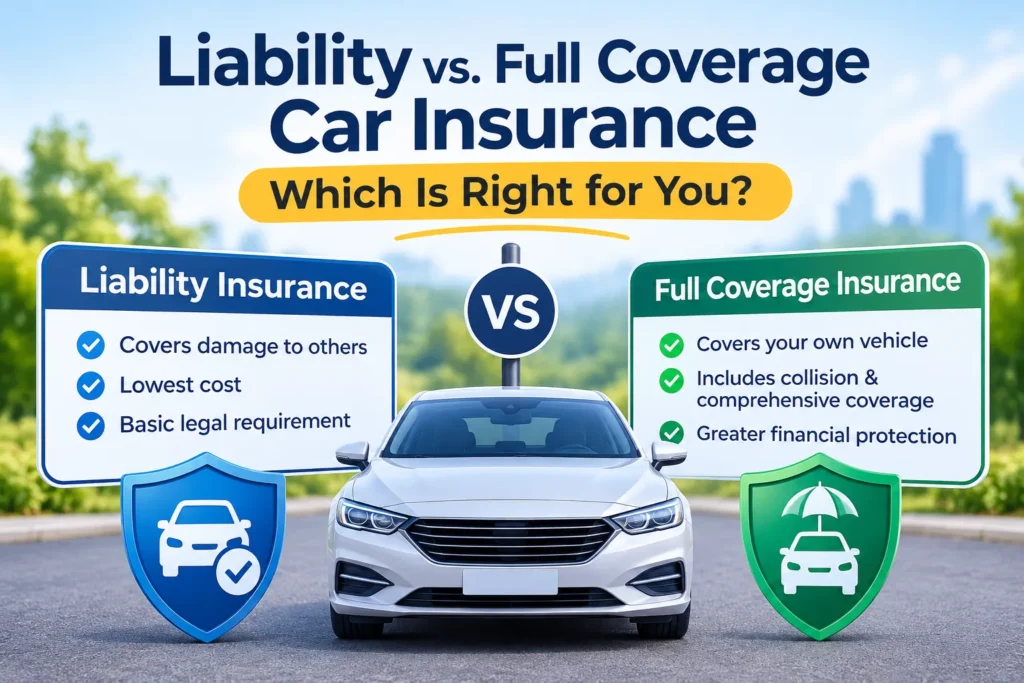
Choosing between liability and full coverage car insurance depends on your budget, vehicle value, and financial situation. Understanding liability vs full coverage car insurance can help you choose a policy that meets your needs without paying for unnecessary protection.
Both options can help protect you financially, but they cover different types of losses. Let’s explore their differences, costs, and when each option makes sense.
What Is Liability Car Insurance?
Liability car insurance is for injuries and property damage when you are legally liable for the accident that you are involved in and caused to another person. Typically covers bodily injury liability and property damage liability.
But with liability-only auto coverage, you won’t be covered for the cost of repairing your own car if you are responsible for an accident. It also generally won’t cover theft, vandalism or weather damage to your vehicles.
For drivers with an older vehicle or those who may only have a small budget for insurance, liability coverage is typically the more affordable option.
What Is Full Coverage Car Insurance?
Full coverage car insurance typically is a policy with comprehensive, collision and liability coverage. This term is very popular but doesn’t necessarily mean that all foreseeable losses are covered.
Collision coverage is coverage that helps to repair or replace your vehicle if you have a covered collision, regardless of who’s at fault, depending on your policy’s terms and deductible. Standard coverage will typically cover the damage caused by non-collision events like theft, vandalism, hail and falling objects.
These extra benefits can increase your premium cost, but can help lower your out-of-pocket costs if you have a covered loss.
Liability vs Full Coverage Car Insurance: Key Differences
Liability differs from full coverage in one aspect: your policy will help you cover damage to your own vehicle with full coverage.
This type of insurance typically covers damage or injuries you cause to other people. Coverage is full, and collision and comprehensive coverage are included to assist with paying for some types of damage to your vehicle.
The best option depends on the vehicle you own, how much it is worth, and whether you would be able to afford to fix or replace the vehicle without insurance.
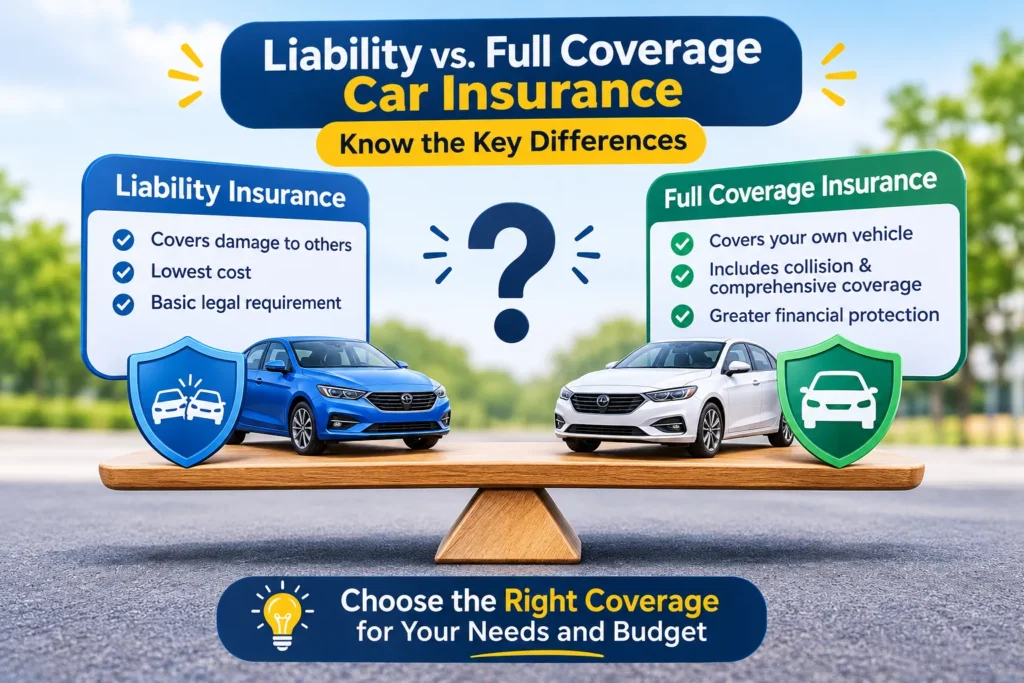
Liability vs Full Coverage Insurance Costs
When comparing liability vs full coverage insurance costs, liability-only policies are usually cheaper because they provide less protection. Full coverage premiums are generally higher because the insurer takes on additional financial risk.
The exact premium is dependent on your driving record, geographic area, age, vehicle, coverage amount, deductible, and insurer.
For an accurate comparison, ask for quotes that have the same liability coverage for both policies. Don’t just pick a policy because they are cheap, but look at what is covered and what is not under the Policy.
Minimum Car Insurance Coverage Requirements
Drivers are required to have some minimum level of liability coverage in most states in the United States, although this may differ among each state. Other states may also require extra coverage, such as personal injury protection and/or uninsured motorist coverage.
Meeting the minimum car insurance coverage requirements may allow you to drive legally, but minimum limits might not cover all the costs of a serious accident. You might be liable for more than the amount covered by the policy.
Some drivers who finance or lease a car may also be required by their lender (or leasing company) to have collision and comprehensive coverage for their vehicle.
When to Choose Liability or Full Coverage
Understanding when to choose liability or full coverage starts with evaluating your vehicle’s value and your ability to handle unexpected expenses.
If your vehicle is older, has a low market value and you can cover the replacement cost yourself, you might want to consider liability-only coverage. It is also an option if the extra coverage is high compared to the value of the vehicle.
It might be best to choose full coverage if you have a newer or more expensive car, use the vehicle every day, or it would be difficult to stand the financial loss of a totaled car.
Before canceling collision or comprehensive coverage, review your contract if you have a car loan or lease.
How to Compare Your Options
When evaluating liability car insurance vs full coverage, consider your car’s current market value, your emergency savings, and the cost of additional protection.
Make a price comparison of annual premiums and deductibles. For instance, a coverage option that is much more expensive annually for a low dollar vehicle may not be worth the extra cost. If you were to buy a new vehicle and it would cause a serious hardship, though, the extra premium might be worth it.
Before deciding, read exclusions and coverage limits as well as optional protections.
Conclusion
Choosing liability vs full coverage car insurance comes down to balancing affordability with financial protection. The liability-only insurance plan might be the best option for a driver who owns an older vehicle and is able to cover the repair or replacement expenses on their own, whereas full coverage insurance could be beneficial to a driver who has a newer car or an expensive car.
A right policy is one that’s within your protection budget and fulfills legal needs.
Frequently Asked Questions
Is liability insurance cheaper than full coverage?
Usually, yes. Liability-only policies generally cost less because they do not include collision and comprehensive coverage for your own vehicle.
What is the difference between liability and full coverage?
Liability insurance covers injuries and property damage you cause to others. Full coverage generally adds collision and comprehensive protection for your vehicle.
Does full coverage car insurance cover everything?
No. Coverage depends on your policy, exclusions, limits, and deductibles. Events such as mechanical breakdowns and routine wear are generally not covered.
Can I drive with liability-only car insurance?
In many U.S. states, yes, provided your policy meets the applicable legal requirements. However, lenders and leasing companies may require additional coverage.
Should I keep full coverage on an older car?
Consider your car’s market value, annual premium, deductible, and ability to pay for repairs or replacement yourself.
Does liability insurance cover damage to my own car?
Generally, no. You typically need collision or comprehensive coverage for covered damage to your own vehicle.